27 May 2026 · Facebook Ban Service · 8 min read
How to get someone banned from Facebook by reporting the right violation
If you want to know how to get someone banned from Facebook, the honest answer is that you report a genuine Community Standards or legal violation through official channels and let Facebook's review disable the account. There is no report-count trigger. Facebook acts on confirmed violations and a strike record, so one well-evidenced report beats a hundred empty ones.
Plenty of people search how to get someone banned on Facebook expecting a button, a bot or a magic number of reports. Facebook does not work that way. A profile, Page or group comes down when a review confirms it broke a written rule, so your real job is to match a genuine violation to the right report and to evidence it well. The sections below walk through what actually moves the needle, and what quietly wastes your week.
What does getting someone "banned" from Facebook actually mean?
"Banned" is loose slang, and on Facebook it points to three different outcomes. A single rule-breaking post is just removed. A Page that crosses the line is unpublished and then taken down, which hides it from everyone but is not the same as ejecting a person. Getting a human banned means getting their personal profile disabled, which locks them out of the account entirely. That distinction shapes everything that follows, because each surface runs through its own report flow and its own threshold. Meta uses the words plainly: profiles are disabled, Pages are unpublished or removed. So how to get someone's account banned on Facebook is really a question about account-level enforcement, not about deleting one bad photo. Aim at the wrong surface and you can report all week with nothing to show for it.
What gets a Facebook account disabled, and what never will?
An account is disabled when it stacks up serious or repeated breaches of Facebook's Community Standards, not when enough people dislike it. The categories that reliably trigger enforcement are concrete: impersonation and fake identities, scams and financial fraud, coordinated harassment and credible threats, the sale of illegal or counterfeit goods, and anything touching terrorism or child safety, which Meta treats as an instant-removal offence. Scale shows how seriously the platform takes these. Meta estimates that roughly 4% of its more than three billion monthly users are fake, about 140 million accounts, and says it actioned over a billion of them in a single quarter (Meta Community Standards Enforcement Report, Q3 2025, reported by Social Media Today). What does not work matters just as much. A profile that annoys you, an ex you would rather forget, or a competitor with better reviews maps to no rule, so a grudge never gets anyone banned. Every time we report a Facebook page through official channels, the case rests on a specific rule and the evidence to back it.
How does Facebook's strike system decide a temporary vs permanent ban?
Facebook runs an escalating strike system, so a short block and a permanent ban sit on the same ladder. Most confirmed violations add a strike, and the penalty grows as strikes accumulate. Knowing how to get someone permanently banned from Facebook is mostly knowing that you cannot force the final rung: a permanent disable follows a single severe violation or a long pattern of confirmed breaches, never a number you can rush. As Meta states in its Transparency Center, "if you continue to post content that goes against the Community Standards after repeated warnings and restrictions, we will disable your account." Strikes also expire after a year, which is why recent, genuine violations carry the most weight. A pile-on does not shorten the ladder; documented, repeat breaches are what walk an account down it.
| Strikes on the account | What Facebook does |
|---|---|
| 1st strike | A warning, with no feature restrictions |
| 2nd–6th strike | Limited features, for example being blocked from posting in groups |
| 7th strike | One-day block on creating content |
| 8th strike | Three-day block on creating content |
| 9th strike | Seven-day block on creating content |
| 10th strike and beyond | Thirty-day block on creating content |
| Severe or persistent violations | Account disabled |
Meta publishes this ladder on its Restricting accounts page, and it counts strikes separately for most content (90 days) and severe content (longer). The takeaway for a reporter is simple: your evidence decides whether a strike lands, and the strikes decide the rest.
How do you report someone so Facebook actually reviews their account?
You report through Facebook's own tools, and the route matters far more than the volume. Pick the surface and the reason that genuinely match the breach, then hand the reviewer something concrete to confirm.
- To report a profile, open it, tap the three-dot (···) menu and choose Find support or report profile, then pick the reason that fits.
- To report a specific post or comment, use the ··· on that item; it feeds the same account's record rather than a vague complaint about the person.
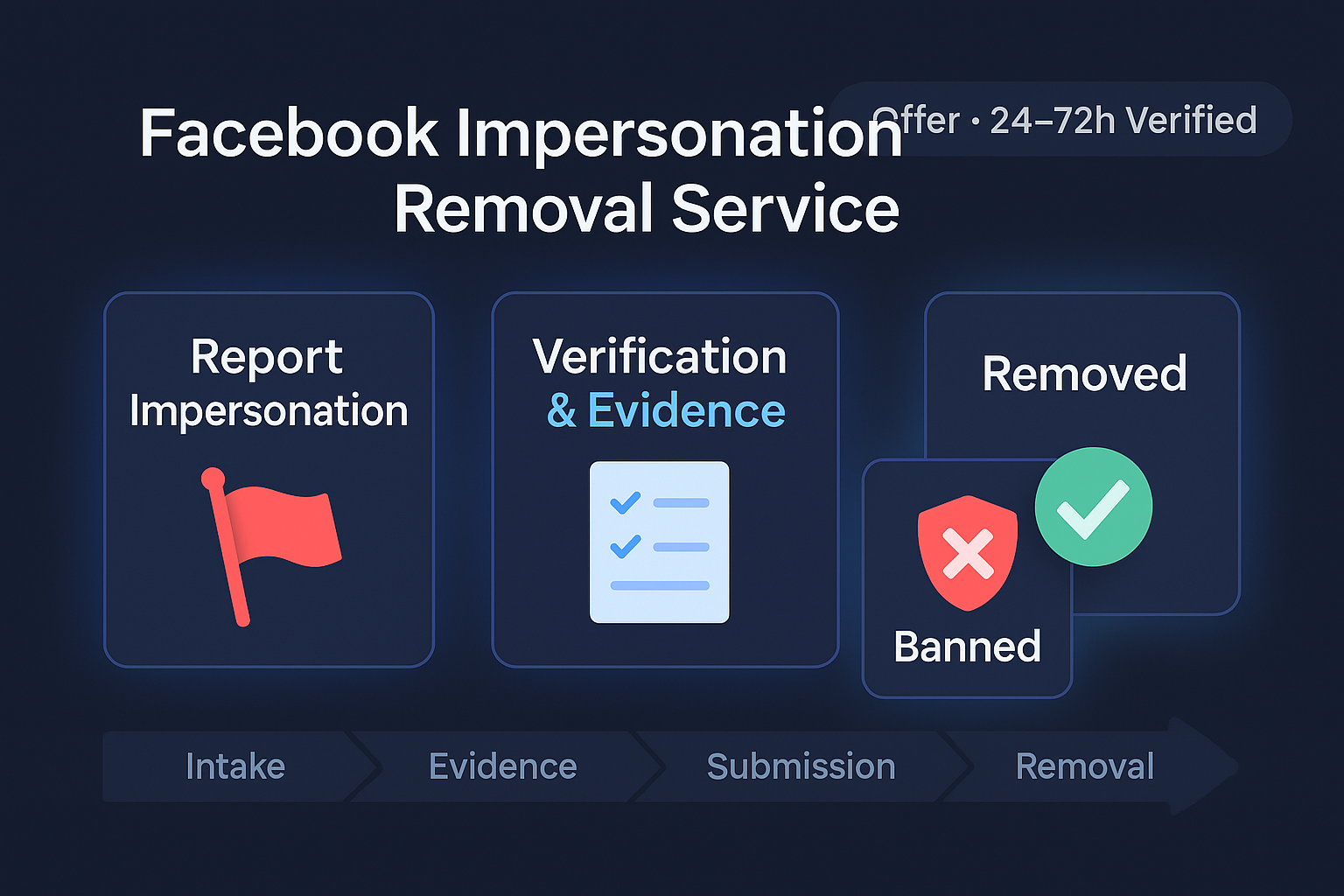
- For impersonation, including an account pretending to be you or your business, use Facebook's dedicated impersonation report, which works even if you do not have an account. That is how to get someone Facebook banned when you are not friends with them or not on the platform at all.
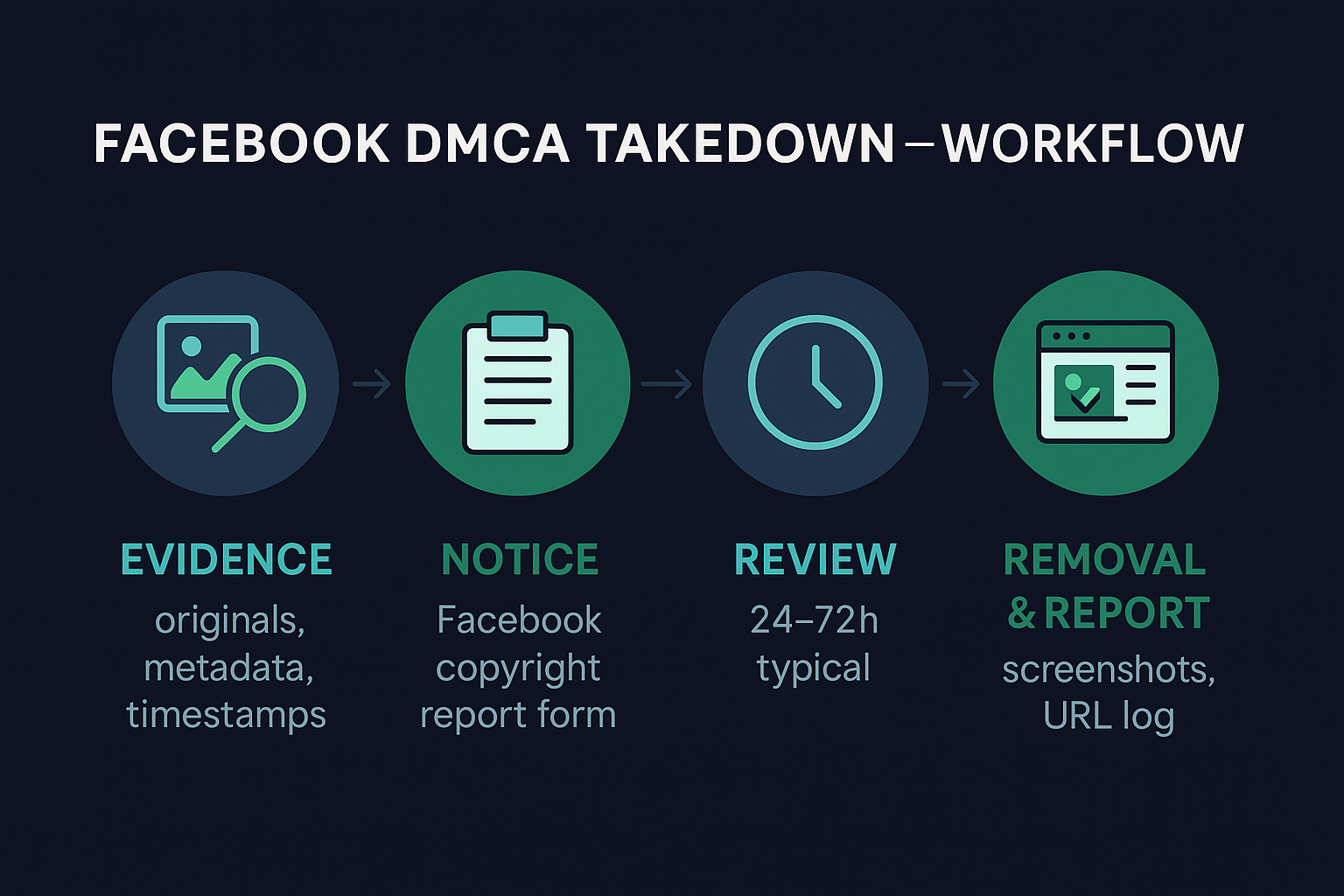
- For theft of your work, such as your photos, video or trademark, file a copyright or trademark report instead of a generic one, so it reaches the right team.
- Whatever the route, gather the account link and time-stamped screenshots first, and state plainly which Standard was broken.
Does the number of reports change whether someone's Facebook gets banned?
No. Facebook does not keep a running tally and pull an account once it passes a secret number. A report opens a review; the review checks the content against the rules; an action follows only when there is a real breach to find. Twenty friends flagging the same harmless post achieve nothing, while one precise report on a genuine scam can start the process. The real answer to how to get someone's Facebook banned is evidence, not arithmetic. Worse, rallying a crowd to pile on a target is itself against Meta's rules, and the system is tuned to spot and discount it, which is exactly why a Facebook mass report tool or bot cannot force a takedown. Accuracy is the only lever you actually control.
What happens to the account after you report it, and can a banned person come back?
After a valid report, Facebook reviews the content and, if it confirms a breach, adds a strike or disables the account; you can usually track the result in your Support Inbox. Your report stays confidential, so the person is told their content broke a rule but not who flagged it. A disabled user is not always gone for good. Meta gives most disabled accounts a window to appeal and verify identity, so a wrongly hit account can return. What does not work is sneaking back: spinning up a fresh profile to dodge a disable is ban evasion, which Meta's Account Integrity standard prohibits and enforces across both Facebook and Instagram through linked Meta accounts. A serial offender who keeps rebuilding leaves a trail that makes each removal easier, not harder. Straightforward reviews often land within a day, though messy cases take longer.
What if Facebook won't disable the account you reported?
Sometimes a report comes back with no action, and that is not always a mistake. If an account is merely rude, wrong or irritating rather than rule-breaking, no volume of reports will disable it, and that limit protects everyone, including you. When you believe the call was wrong, strengthen the case rather than repeat it: name the exact Community Standard, attach dated screenshots and direct links, and report each genuine violation on its own. For anything actually criminal, such as extortion, credible threats or material involving a child, go past the platform and tell the authorities, for example the FBI's IC3 or, for child safety, the NCMEC CyberTipline. If the case is real but complex, you can hand it to our team to assemble and file, or see how the wider Facebook Ban Service qualifies a report before anything is submitted. We only pursue real violations, and legitimate accounts are left alone.
Sources
- Meta Transparency Center — Restricting accounts (the strike ladder and disable policy)
- Meta Transparency Center — Counting strikes (how long strikes count and when they expire)
- Meta Community Standards — Account Integrity (ban evasion and cross-app enforcement)
- Facebook Help — How to report a profile
- Facebook Help — Report a profile or Page pretending to be you or someone else
- Facebook Help — My account is suspended or disabled (appeals)
- Social Media Today — Meta's latest data on fake accounts (Q3 2025)
FAQ
Is "how to get someone permanently banned from Facebook" even possible?
Not as a switch you can flip. A permanent disable follows either one severe violation, such as child exploitation or credible threats, or a long record of confirmed strikes. You cannot force it with volume or speed. You can only report each genuine breach accurately and let the strike system do its work.
How long does a Facebook ban last?
It depends on the strike. Feature blocks run from one day up to thirty, while a disabled account is meant to be permanent. Even then it is not always final, because Meta gives most disabled accounts a window to appeal and, in many cases, to verify identity, so a wrongly actioned account can be restored.
Will the person know who reported them?
No. Facebook keeps reports confidential. The person may be told that something they posted broke a rule, or that their account was restricted, but they are not shown who filed the report. That confidentiality is deliberate, and it protects people reporting harassment or threats.
How many reports does it take to get someone's account banned on Facebook?
None in particular, because Facebook does not ban an account once reports reach a number. It never scores accounts by report volume. A single evidenced report about a real breach outperforms a coordinated pile-on, which the platform is built to recognise and discount.
Can you get banned yourself for false or coordinated reporting?
Yes. Organising fake or mass reports against an innocent target breaches Meta's rules on misusing the reporting system, and the throwaway accounts behind it can be restricted or disabled. Reporting a genuine violation is always allowed and safe; manufacturing one with a crowd is the part that backfires.